DPI Commons Team · Explainer · 3 min read
Beyond Roads and Bridges: Why Digital Public Infrastructure (DPI) is the Backbone of Our Future Economy
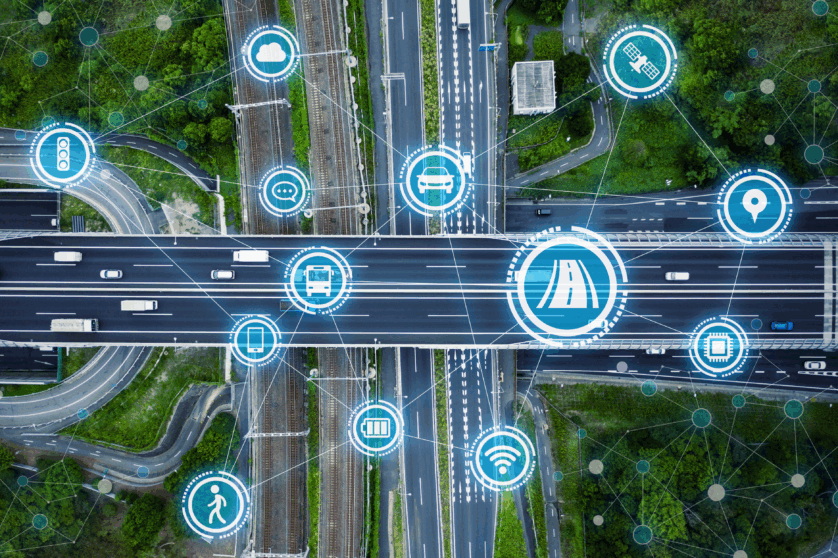
For decades, a nation’s progress was measured by the concrete it poured. Highways, power grids, and water systems formed the foundational backbone of the economy, connecting citizens to essential services, markets, and to one another. Today, however, the defining infrastructure of the 21st century is largely invisible. It is built not with asphalt or steel, but with code and data. Welcome to the era of Digital Public Infrastructure (DPI)—a quiet but revolutionary shift in how digital societies are built, governed, and scaled for the public good. What Exactly is DPI? If you have ever used your smartphone to instantly transfer money to a street vendor, or logged into a government portal using a single, verified digital ID, you have already interacted with DPI. At its core, Digital Public Infrastructure refers to a set of shared, interoperable digital systems that allow people, businesses, and governments to securely interact online. While a physical highway allows trucks to transport goods, DPI acts as the "digital highway" that allows data to travel seamlessly. A fully realized DPI ecosystem relies on three foundational pillars: 1. Digital Identity: Systems that allow individuals to securely and verifiably prove who they are online. 2. Digital Payments: Open, fast, and interoperable financial networks that allow money to move instantly across different banks and e-wallets. 3. Data Exchange Layers: Secure frameworks that allow individuals and institutions to safely share information across platforms with explicit consent. When these three pillars work together, they eliminate the need to build digital systems from scratch for every new service. They become the underlying "digital commons" upon which endless public and private innovations can be built. The true power of DPI lies in how it handles the digital economy's most valuable resource: data. In the early days of the internet, data was often hoarded by large tech monopolies or trapped in disconnected government silos. If a hospital had your medical records, you could not easily share them with a specialist across town. If a bank held your financial history, you could not easily leverage that data to get a better loan from a competitor. DPI fundamentally changes this dynamic by treating data logistics as a public utility. Through secure "data exchange layers," DPI allows different software systems to talk to each other. More importantly, it enforces privacy by design. In a good DPI ecosystem, data does not move freely in the shadows; it is driven by user consent. A small business owner can explicitly authorize their bank to share their transaction history with a lending platform to secure a micro-loan. The data remains secure, the transaction is logged for accountability, and the power shifts back to the person who generated the data in the first place. Real-World Impact: Designing for Inclusion Why should everyday citizens care about digital architecture? Because when DPI is built correctly, the real-world socioeconomic impact is staggering. Historically, millions of people have been excluded from the formal economy simply because they lacked a physical ID card or lived too far from a bank branch. DPI bridges this gap. By providing citizens with a digital identity and connecting them to interoperable payment rails, governments can instantly distribute emergency financial aid directly to those who need it most, cutting out bureaucratic middlemen and reducing fraud. For Micro, Small, and Medium Enterprises (MSMEs), DPI is a game-changer. Instead of paying exorbitant fees to exclusive e-commerce platforms, a local artisan or food vendor can use open payment standards to accept money from any customer, regardless of which banking app they use. This drastically lowers the barrier to entry, allowing small businesses to compete on a national—and increasingly regional—scale. As we move deeper into an AI-driven, data-heavy future, the way we build our digital infrastructure will dictate the fairness of our societies. If we rely solely on closed, proprietary systems, we risk creating a digital landscape defined by lock-in, high costs, and exclusion. By treating essential digital rails as a public good, DPI ensures that innovation, market access, and data sovereignty are available to everyone. It is more than just a technological upgrade; it is a new social contract for the digital age, ensuring that as the economy moves online, no one is left offline.